HOW TO PICK A SKATEBOARD
There are many different styles of skateboarding that have evolved since the 1950s, so it's no surprise that picking the best skateboard can be challenging. This skateboard buying guide for beginners will break down the parts of a skateboard and lay out everything you need to know to pick the right skateboard for any rider. It will also show you how to pick the right skateboard deck, wheels, trucks, hardware, and more to build up a custom skateboard specific for any riding style.
HOW TO PICK A SKATEBOARD DECK
The first thing to consider when buying a new complete skateboard or building one is the deck. Each skateboard deck will have two main factors to consider: the shape and the width. The shape is all about the rider's riding style, and the width is for getting the right size.
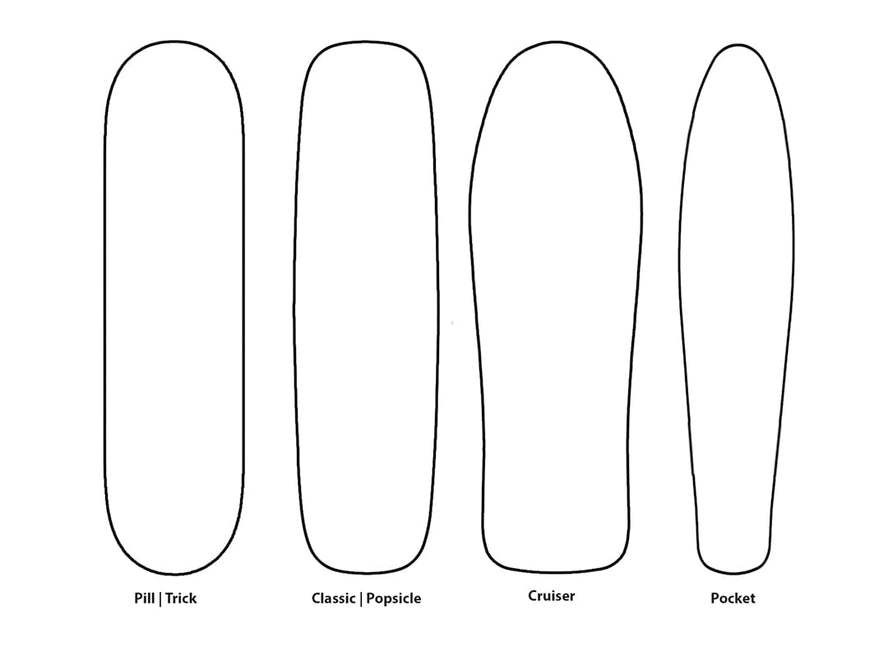
The three main shapes are Classic, Pill, and Cruiser. There are also pocket skateboards, which are small skateboards with their own specific purpose. The ideal length of the board is determined by your height, and the width is determined by your shoe size. Having a suitable board width is more impactful on the quality of the ride than the board's length. If you already know what type of board you want, jump to our skateboard sizing charts now!
WHAT'S THE DIFFERENCE BETWEEN THE DECK SHAPES?
Classic | Popsicle
These decks have a shape with a blunt (not round) tip and tail and are symmetrical. This shape is a sort of hybrid between old school pool boards and Pill/Trick boards. Classic/Popsicle boards are designed for street and park riding and for doing ground tricks. The symmetrical design allows riders to ride either direction without impacting board performance.
Pill | Trick
These decks have a rounded nose and tail and are symmetrical. This is the most common shape of skateboard decks today. These are designed for street and park riding and for doing ground tricks. The symmetrical design allows riders to ride either direction without impacting board performance.
Cruiser
The cruiser deck is a directional, non-standard skateboard that often looks “old school.” Cruisers are designed for exactly that: cruising for fun, like surfing the streets of the city or for commuting. These boards ride with a lot of flow and balance, making them great for anyone who wants to ride around but doesn't have much interest in doing tricks.
Pocket
Pocket boards are mini decks—generally narrow, plastic, fun-sized cruisers that will easily fit in a backpack or locker. The size of these decks makes them great for short distances and winding through narrow spaces, like crowds of people. These boards are not designed for doing any tricks. They are not as stable at high speeds or on hills and can become uncomfortable over long distances, but they are very fun to ride!
HOW TO PICK SKATEBOARD WIDTH
The width of the skateboard deck best for any rider is mostly determined by shoe size, but type of riding and personal preferences play a role in finding the perfect width for any rider. The below information is a great place to start for Classic and Pill skateboards, but finding the width that works best for skateboarders is dialed in over time of riding and trying out slightly different widths.
Pocket boards are all designed to be narrow, so it is really all about personal preference. Cruiser skateboards are much wider than other deck types, so ideal width is also about personal preference; however, if your shoe size is 44 or higher in EU sizing, cruiser decks that are 8.5 inches or wider would be best.
Narrower boards will be lighter and easier for beginners to lift and flip the board; however, if the board is too narrow for their shoe size, the board will feel unstable and it will be harder to keep balance. A wider board will be more stable and offer a smoother ride but will also be heavier, making tricks harder. With that said, a deck on the narrower end of a rider's size range will be great for those looking to learn tricks, and a deck on the wider end of a rider's size range will be great for those who want to do more ground tricks and general cruising. Finding the sweet spot or perfect width for any rider through trial and error is key.
HOW TO PICK SKATEBOARD LENGTH
Now that you know the shape and width of the board you'll need, picking the right length is next! Height is generally used to dial in the range of lengths a rider's skateboard deck should be: in short, the shorter the rider, the shorter the length. Newer riders should also buy on the shorter length of their range as the shorter board will be easier to control and learn on (just make sure the width is still right, since as we stated earlier width is more important than length). As skills progress, riders may find that they want a slightly longer board for more balance and stability (again with dialing it in through personal preference and feel).
Deck Summary:
- Classic/Popsicle and Pill/Trick skateboards are normal skateboards designed for doing tricks.
- Cruiser boards are designed for cruising.
- Pocket boards are small cruisers great for shorter distances and tight weaving.
- Quick and easy sizing should be based on width, using the width size chart below.
SKATEBOARD WIDTH SIZE CHART
 |
 |
 |
 |
|
| Shoe Size - US | Classic | Popsicle | Pill | Trick | Cruiser | |
|---|---|---|---|---|
| < 4 | < 6" | < 6" | 8.0" Or Less | Any |
| 4 | 6.75 - 7.0" | 6.75 - 7.0" | 8.0" Or Less | Any |
| 5 | 6.75 - 7.1" | 6.75 - 7.1" | 8.0" Or Less | Any |
| 6 | 6.9 - 7.2" | 6.9 - 7.2" | 8.0"+ | Any |
| 6.5 | 6.9 - 7.3" | 6.9 - 7.3" | 8.0"+ | Any |
| 7 | 7.0 - 7.5" | 7.0 - 7.5" | 8.0"+ | Any |
| 7.5 | 7.0 - 7.5" | 7.0 - 7.5" | 8.0"+ | Any |
| 8 | 7.0 - 7.5" | 7.0 - 7.5" | 8.0"+ | Any |
| 8.5 | 7.8 - 8.25" | 7.8 - 8.25" | 8.0"+ | Any |
| 9 | 8.00 - 8.3" | 8.00 - 8.3" | 8.0"+ | Any |
| 9.5 | 8.00 - 8.4" | 8.00 - 8.4" | 8.0"+ | Any |
| 10 | 8.1 - 8.5" | 8.1 - 8.5" | 8.5"+ | Any |
| 10.5 | 8.1 - 8.5" | 8.1 - 8.5" | 8.5"+ | Any |
| 11 | 8.25 - 8.5" | 8.25 - 8.5" | 8.5"+ | Any |
| 11.5 | 8.25 - 8.6" | 8.25 - 8.6" | 8.5"+ | Any |
| 12 | 8.37 - 8.7" | 8.37 - 8.7" | 8.5"+ | Any |
| 13 | 8.5 - 8.7" | 8.5 - 8.7" | 9.5"+ | Any |
| 14 + | > 8.5" | > 8.5" | 9.5"+ | Any |
HOW TO PICK SKATEBOARD TRUCKS
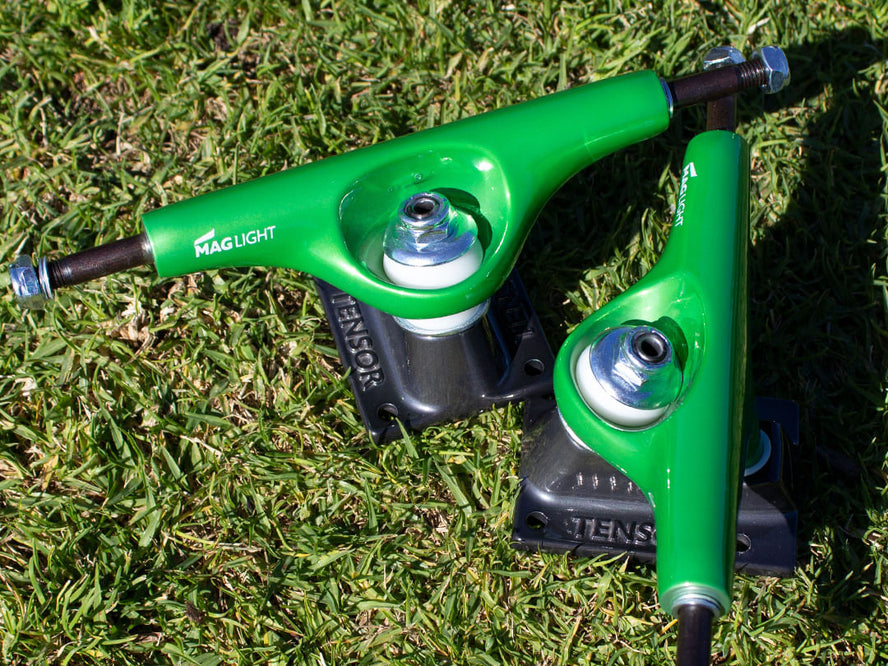
Once you have the ideal deck picked out, you'll need to start adding components to make it complete or to dial in on the perfect pre-built complete skateboard. So, how do you decide which skateboard trucks are best for your riding style and deck? Great question, since trucks are very important to how a skateboard functions. The trucks manipulate how the skateboard turns and reacts to rider input for tricks.
The simple answer is this: if it's a pre-built complete board, the trucks will be the right size already. If you're building a board yourself, the width of your trucks should closely match the width of your skateboard deck.
More advanced riders will choose trucks based on many different truck features. There are actually eight different parts to a skateboard truck, so naturally there are more factors than just the width of the trucks. On top of that there are different heights of trucks; the difference in the heights determines the size of wheels that can fit on the trucks safely and offers different ride characteristics. Then there are hollow trucks that are designed to be lighter than standard trucks, which makes getting the board in the air for tricks easier.
To describe the types simply:
Standard trucks are versatile and work well for any style of riding. They can be fine-tuned to adjust the board's feel and turning capabilities as the rider develops a feel for the board and preferences.
Hollow trucks are simply lighter, making the skateboard easier to lift for tricks. The only downside is you have to try them to know if you like them.
High trucks are taller, offering space for larger wheels. Larger wheels means faster rolling and better rolling over bumps, making them great for riders who want to do more cruising and ground tricks.
Low trucks are shorter, offering less space for wheels. The benefit of low trucks is a better center of gravity and a quicker, more nimble feel. Low trucks are great for riders doing tricks at high speeds who require more stability. (Think of a pro rider on a 30-foot halfpipe).
Now that you know about the types of trucks and how to pick width, it's time to pick the part that makes the skateboard actually go: the wheels!
Trucks Summary:
- Complete (pre-built) skateboards will come with trucks that are sized appropriately for the deck.
- For building your own board, the truck axle width should be close to the deck width, within 0.25 inches.
HOW TO PICK SKATEBOARD WHEELS
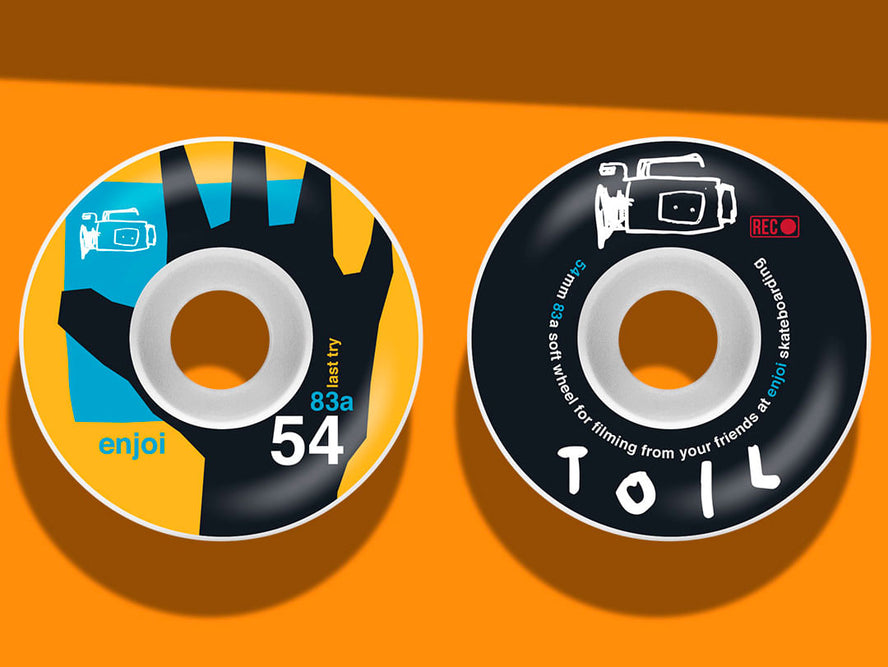
Get going with the right skateboard wheels. All you have to do is pick the diameter and hardness (durometer) that's right for your riding style, and then find a color/graphic you like.
The smaller diameter wheels roll slower and are closer to the ground, making them ideal for trick riding. Larger wheels roll faster and offer more balance, making them great for beginners and cruisers. If you want a happy medium, wheels in the 52-56mm range will be the best of both worlds.
The durometer is the hardness of the wheel. The softer the wheel, the smoother the ride; the harder the wheel, the faster the ride. The softest wheels (79a durometer) are great for rougher terrain and provide the most grip, making them great for cruising around. Hard wheels (101a+ durometer) are the fastest and least grippy and are not good for either smooth or rough surfaces (if you're using these you're likely at a competition skill level). A durometer of 95-99a is the sweet spot: smooth, fast, and just grippy enough to be perfect for a beginner.
What good are wheels if they don't spin? Time to pick the right bearings!
Wheels Summary:
- Complete (pre-built) skateboards come with wheels that are sized appropriately for the build.
- When building your own board for a beginner, average wheel size and diameter is a good place to start (52-56mm diameter and 95-99a durometer).
HOW TO PICK SKATEBOARD BEARINGS
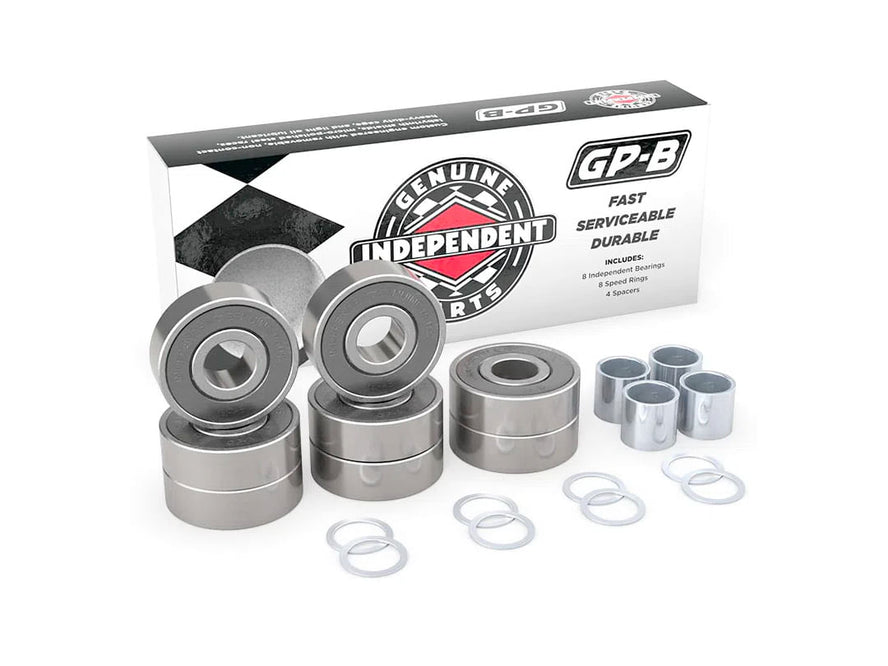
Skateboard bearings are the metal part that goes in the wheel to reduce friction and increase the speed the wheels can turn. Most skate bearings are rated with an ABEC number; the higher the ABEC rating, the faster they'll spin. The standardly used bearings are either ABEC 5 or 7, since they offer a sweet spot of affordability and quickness. As riders' skills progress, they may invest in faster bearings either by going higher in the ABEC rating or getting ceramic bearings, which don't expand in heat—making them smooth, fast, and durable and requiring less maintenance.
Bearings Summary
- Complete (pre-built) skateboards will come with bearings already installed, ready to roll.
- When building your own board for a beginner, ABEC 5-7 bearings are a great place to start.
- The higher the ABEC number, the faster they'll spin.
- Ceramic bearings are the smoothest and come with great bragging rights.
Now we have a complete skateboard, right? Close! One more step: we have to put it all together with some hardware.
HOW TO PICK SKATEBOARD HARDWARE
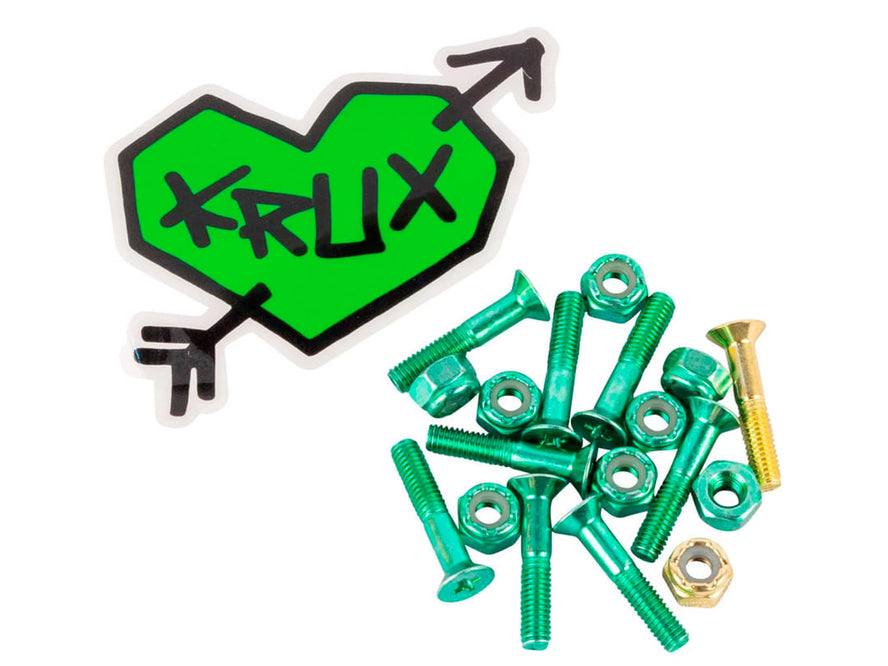
Skateboard hardware is the nuts and bolts that hold the board together. Complete skateboards will come with all of the hardware installed. If you're building a board, the biggest thing to consider is making sure you have everything secured properly. Beyond that, pick your favorite head type and color and get to building!
READY TO SHOP?
Check out all of the skateboards ERIK'S carries and buy the perfect skateboard today!
Still Have Questions?
Our expert staff will help you find the perfect complete skateboard or help you pick out the perfect parts to build your own!
Text with a Human: 952-243-5476
Live Chat: Click the chat icon in the lower righthand corner of this screen.
Phone: 952-351-9148
Email: braintrust@eriksbikeshop.com
Store: Find a Store
Toll Free: 877-885-2453
ABOUT ERIK'S
Erik was only 13 when he started ERIK'S in 1977. His first bike, a hand-me-down from an older family member, sparked his interest in bikes. With entrepreneurial spirit and the money he saved from his job as a paperboy, Erik began his business. ERIK'S Bike Board Ski has grown into the Midwest’s leading bike, snowboard, and downhill ski retailer. We are passionate about our sports and experts on all the gear we carry! Learn more about ERIK’S History.
OUR TOP PICKS Shop All
-
66% OFF

Specialized 2FO Roost Flat Shoes
Regular price $39.99Sale price $39.99 Regular priceUnit price per$120.002023Max 3 at a timeSale -


Specialized Body Geometry SL Footbeds
Regular price $49.99Sale price $49.99 Regular priceUnit price per$0.002023Max 3 at a time -


 +2
+2Specialized Torch 1.0 Shoes
Regular price From $119.99Sale price From $119.99 Regular priceUnit price per$0.002025Max 3 at a time -


Specialized Recon 1.0 Shoes
Regular price $139.99Sale price $139.99 Regular priceUnit price per$0.002025Max 3 at a time -


Five Ten Freerider Pro BOA Mountain Bike Shoes
Regular price From $169.95Sale price From $169.95 Regular priceUnit price per$0.002026Max 3 at a time -


S-Works Ares Road Shoes
Regular price From $212.49Sale price From $212.49 Regular priceUnit price per$0.002023Max 3 at a time -
58% OFF
 +4
+4Specialized Torch 2.0 Road Shoes
Regular price $69.99Sale price $69.99 Regular priceUnit price per$170.002023Max 3 at a timeSale -


Specialized Recon 3.0 Shoes
Regular price $279.99Sale price $279.99 Regular priceUnit price per$0.002025Max 3 at a time